Was Für Einen Tag Haben Wir Heute

Was für einen Tag haben wir heute? translates to "What day is it today?" in English. This simple question is a fundamental part of learning German, helping you navigate daily conversations and schedules. Let's break it down step-by-step.
Understanding the Question
The phrase consists of a few key elements:
- Was: Means "What"
- für einen: Means "for a" or "what kind of" (in this context, it helps specify "what kind of day")
- Tag: Means "Day"
- haben wir: Means "do we have" or "is it" (in this context, it refers to 'having' the day).
- heute: Means "today"
Putting it all together, the question directly asks: "What kind of day do we have today?" or more simply, "What day is it today?"
Answering the Question
To answer, you need to know the days of the week in German:
- Montag: Monday
- Dienstag: Tuesday
- Mittwoch: Wednesday
- Donnerstag: Thursday
- Freitag: Friday
- Samstag: Saturday (also sometimes called Sonnabend, especially in northern and eastern Germany)
- Sonntag: Sunday
The typical answer structure is: "Heute ist…" (Today is…).
Example:
Question: Was für einen Tag haben wir heute?
Answer: Heute ist Montag. (Today is Monday.)
More Examples
Let's look at a few more examples to solidify your understanding.
Example 1:
Question: Was für einen Tag haben wir heute?
Answer: Heute ist Mittwoch. (Today is Wednesday.)
Example 2:
Question: Was für einen Tag haben wir heute?
Answer: Heute ist Freitag. (Today is Friday!)
Example 3:
Question: Was für einen Tag haben wir heute?
Answer: Heute ist Sonntag. (Today is Sunday.)
Adding "Weekend" and "Weekday"
You can also use the words Wochenende (weekend) and Wochentag (weekday) to provide more context.
For example:
“Heute ist ein Wochentag.” (Today is a weekday.)
“Heute ist Wochenende!” (Today is the weekend!)
You could also combine these with the specific day:
“Heute ist Freitag, ein Wochentag.” (Today is Friday, a weekday.)
“Heute ist Sonntag, Wochenende!” (Today is Sunday, the weekend!)
Practical Application
Try asking and answering the question daily! This is a great way to practice your German and reinforce your knowledge of the days of the week.
Imagine you're talking to a friend:
Du: Hallo! Was für einen Tag haben wir heute?
Dein Freund: Hallo! Heute ist Donnerstag.
Du: Super! Danke!
Variations of the Question
While "Was für einen Tag haben wir heute?" is perfectly correct, you might also hear a slightly simpler version:
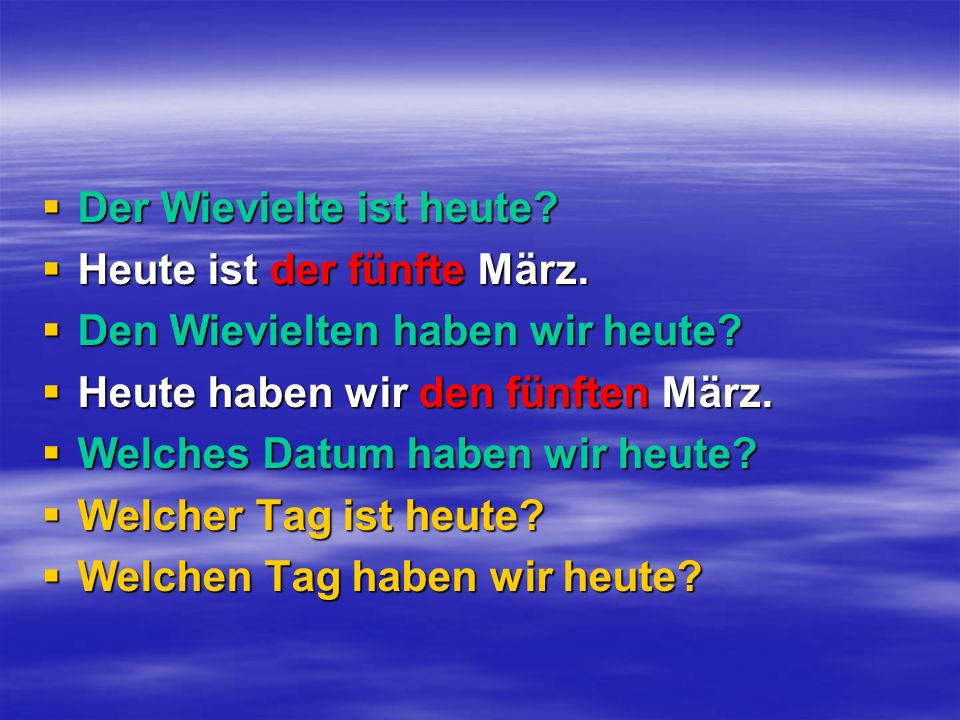
Welchen Tag haben wir heute? This also translates to "What day is it today?" and is equally common.
The key difference is that "welchen" is a direct way to ask "which" day, while "was für einen" is asking "what kind of" day.
Understanding both phrases will make you a more confident German speaker.
Conclusion
Learning to ask and answer "Was für einen Tag haben wir heute?" is a fundamental step in mastering German. By understanding the individual words, practicing the structure, and using real-life examples, you'll be well on your way to confidently discussing the days of the week in German. Remember to practice regularly, and don't be afraid to make mistakes – that's how you learn! Good luck, and viel Erfolg (much success)!