What Is Modal Verb In German
Was ist ein Modalverb im Deutschen?
Modalverben are special verbs in German. They don't describe a direct action. Instead, they add information about how the main verb is done. They express things like possibility, necessity, permission, or ability. Think of them as helping verbs that change the meaning of the main verb.
The Six Modal Verbs
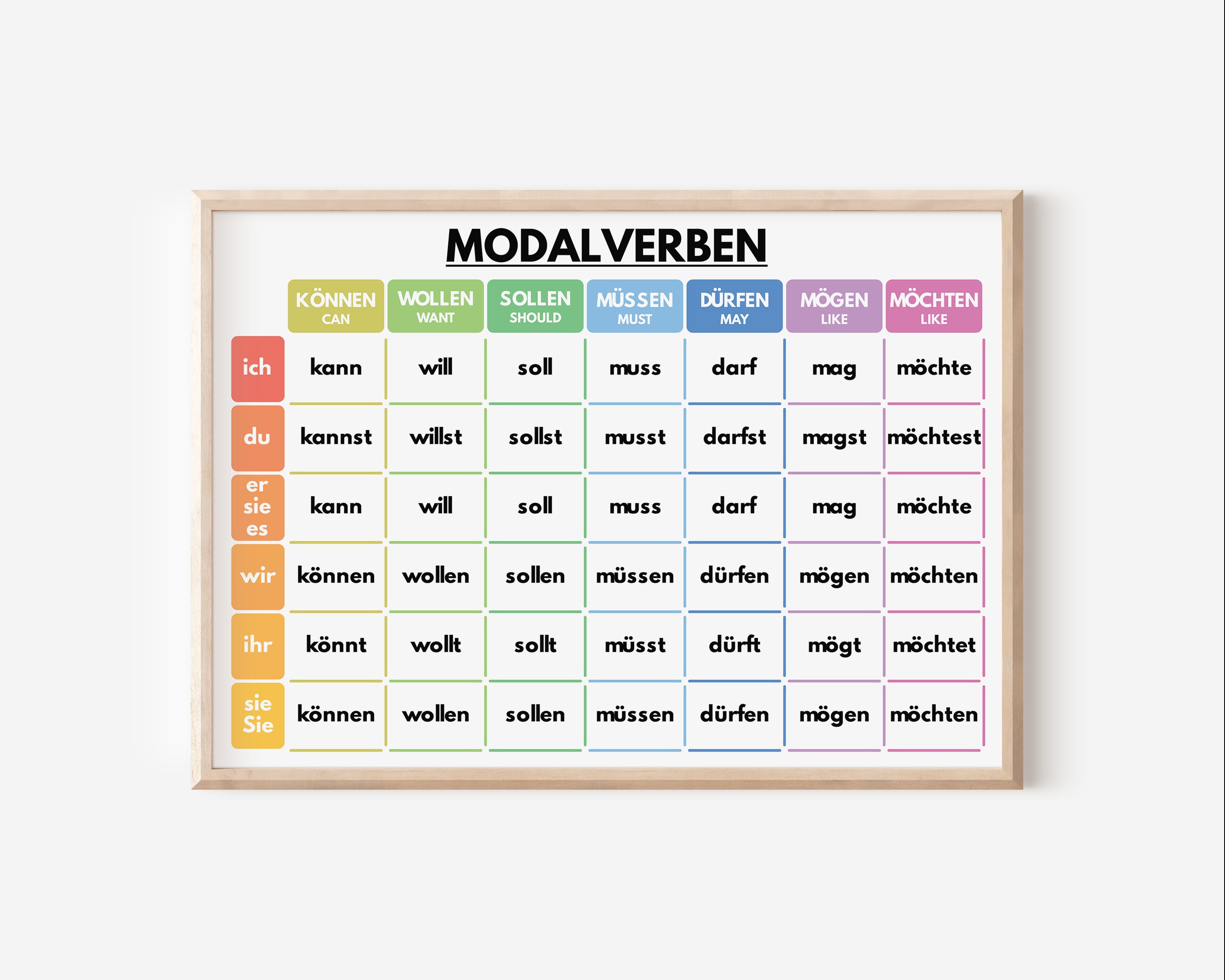
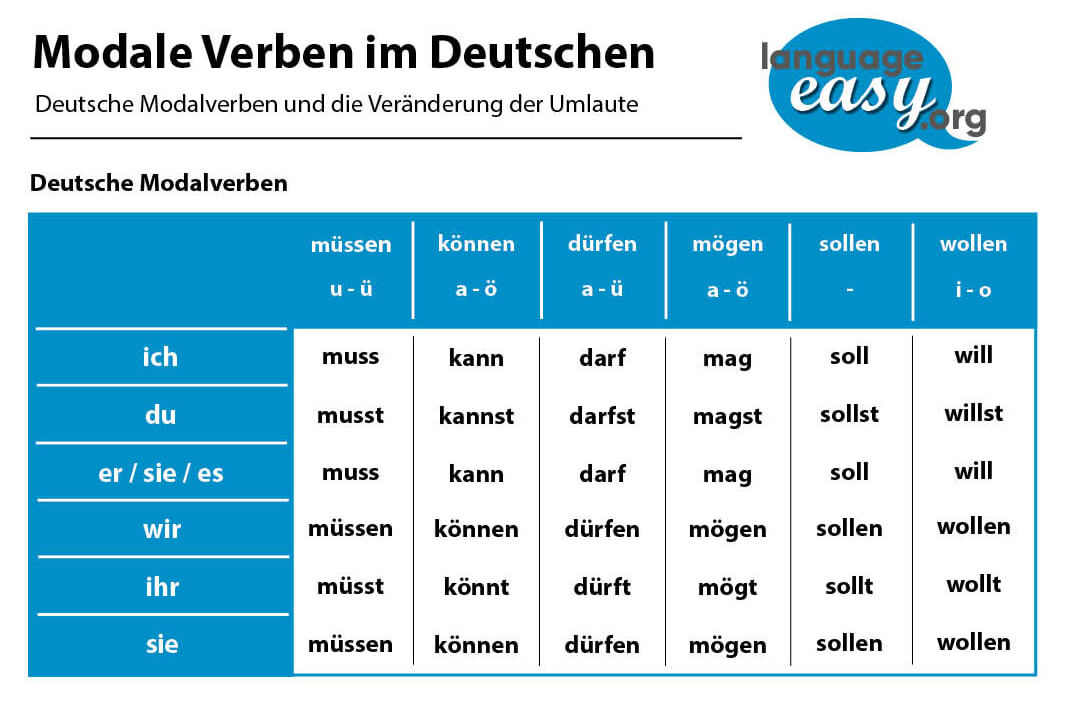
There are six main modal verbs in German. Knowing these is key to understanding how they work. They are:
- dürfen (to be allowed to)
- können (to be able to)
- müssen (to have to)
- sollen (should, ought to)
- wollen (to want to)
- mögen (to like to, to may) - often used in Konjunktiv II as möchten (would like to)
How Modal Verbs Work
A modal verb always appears with another verb. This other verb is in the infinitive form (the base form) and is placed at the end of the sentence. The modal verb is conjugated to match the subject of the sentence. This is different from English, where you sometimes need to add "to" before the infinitive. In German, it's just the infinitive form at the end.
For example:
Ich muss lernen. (I have to learn.)
Here, "muss" is the conjugated modal verb (for "ich") and "lernen" is the infinitive at the end.
Word Order is Crucial
Remember the infinitive goes to the end! This is a fundamental aspect of German sentence structure, especially with modal verbs. Getting this wrong can completely change the meaning or make the sentence grammatically incorrect. Practice placing the infinitive at the end in your sentences.
Consider this example:
Wir können ins Kino gehen. (We can go to the cinema.)
The Meaning of Each Modal Verb
Each modal verb has a specific meaning. Understanding these nuances is important for accurate communication. Here are some brief explanations:
- dürfen: Indicates permission. "Du darfst hier parken." (You are allowed to park here.)
- können: Indicates ability or possibility. "Ich kann Deutsch sprechen." (I can speak German.) "Es kann regnen." (It may rain.)
- müssen: Indicates necessity or obligation. "Ich muss zur Arbeit gehen." (I have to go to work.)
- sollen: Indicates a duty or obligation, often from an external source. "Du sollst deine Hausaufgaben machen." (You should do your homework.) Think of it as something someone else expects you to do.
- wollen: Indicates intention or desire. "Ich will ein Buch lesen." (I want to read a book.)
- mögen/möchten: mögen indicates liking to do something, möchten (Konjunktiv II) is used for polite requests. "Ich möchte einen Kaffee." (I would like a coffee.) "Ich mag singen." (I like to sing.)
Practical Applications
Modal verbs are essential for everyday communication in German. Use them to express your abilities, obligations, and desires. They allow you to convey nuances and subtleties in your speech and writing. Start by incorporating them into simple sentences. For example, when asking for directions, you might say, "Können Sie mir helfen?" (Can you help me?). When planning your day, you might say "Ich muss einkaufen gehen." (I have to go shopping.).
By mastering modal verbs, you'll significantly improve your fluency and understanding of German. Remember to practice regularly and pay attention to how native speakers use them. Good luck!