Wünschen Dir Alles Gute Zum Geburtstag

Alles Gute zum Geburtstag! What Does it REALLY Mean?
Imagine a vibrant birthday party. Balloons, cake, and happy faces everywhere! That’s the feeling behind saying "Alles Gute zum Geburtstag!" in German. It’s the equivalent of "Happy Birthday" in English. It's your way of showering someone with positive vibes on their special day.
Let's break it down word by word. Think of it as a building, each brick supporting the overall structure. "Alles" means "everything" or "all." Visualize a giant overflowing box containing all the good things life has to offer: happiness, health, success.
"Gute" means "good." Think of a shining gold star, representing something positive and desirable. We want the best things for the birthday person! It modifies the word *Alles*, to refine the meaning of all things good.
"zum" is a contraction of "zu dem." This means "to the." Imagine an arrow pointing *toward* the birthday. It’s directing all those good wishes toward the special occasion.
"Geburtstag" means "birthday." This one’s pretty straightforward! Think of a calendar with a big circle around a specific date. That's the *Geburtstag*!
Putting it Together: A Colorful Picture
Now, let's assemble the words into a vivid mental picture. "Alles Gute zum Geburtstag!" becomes: "Everything good to the birthday!" It’s like sending a package filled with positive energy right to their birthday celebration. Think of it as a burst of confetti shaped like good wishes raining down.
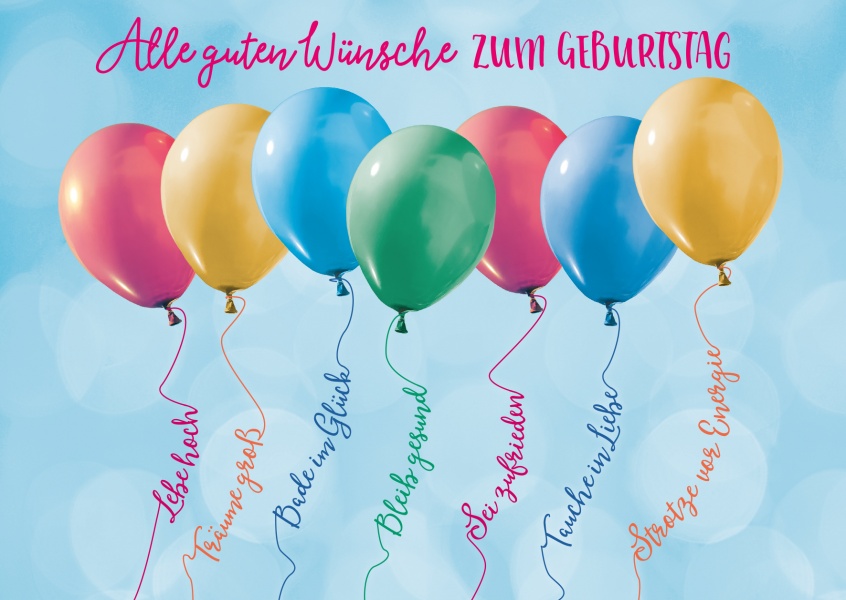
Imagine a spectrum of positive things. Happiness (Glück), health (Gesundheit), success (Erfolg). These are all contained within that "Alles Gute." You're not just wishing them a happy day, you're wishing them a year filled with these wonderful things.
It's more than just a polite phrase. It conveys genuine warmth and care. It's like giving someone a warm hug and a big smile on their birthday.
Variations and Enhancements: Adding Sprinkles
Want to add a little extra flavor? You can use variations to make your birthday wish even more special. Think of it as adding sprinkles to a delicious cake.
You can say "Herzlichen Glückwunsch zum Geburtstag!" This is a more heartfelt and sincere version. "Herzlichen" means "heartfelt" or "cordial." Imagine holding your hand over your heart as you say it.
Another option is "Ich wünsche dir alles Gute zum Geburtstag!" This translates to "I wish you all the best for your birthday!" The phrase *Ich wünsche dir* directly expresses your wishes to the birthday person.
Consider adding the person's name. "Alles Gute zum Geburtstag, Anna!" Using their name adds a personal touch. It shows you care enough to acknowledge them specifically.
Pronunciation Tips: Sounding Like a Pro
Pronunciation can be tricky. But with a few visual cues, you can master it! Listen to online audio clips of native speakers. Pay attention to the rhythm and emphasis.
Practice each word slowly. Focus on the vowel sounds. Imagine exaggerating the pronunciation, then gradually refine it.
Alles: Think of "AH-less" with a slightly rolled "r" sound at the end if possible.
Gute: "GOO-teh." The "e" at the end is a short, soft sound.
zum: "tsoom." It rhymes with "zoom."
Geburtstag: "Geh-BOORTS-tahg." The "g" at the beginning is a hard "g" sound. The "tag" is pronounced like the English word "tag."
Say the whole phrase aloud. Record yourself and compare it to a native speaker. Repetition is key!
Real-World Examples: When to Use It
"Alles Gute zum Geburtstag!" is appropriate in any birthday situation. Imagine receiving a birthday card: that phrase would be fitting in this case. It can be said in person, written in a card, or even sent in a text message. Think of it as the universal greeting for birthdays in German-speaking countries.
It’s suitable for friends, family, colleagues, and even acquaintances. Consider it a versatile tool in your German language toolbox. You can use it confidently with anyone celebrating their special day.
It’s a simple yet powerful way to brighten someone's day. So, go ahead and spread some birthday cheer!